Published November 2, 2026
Multigenerational Real Estate: A New Way of Thinking About Family, Homeownership, and Building a Legacy

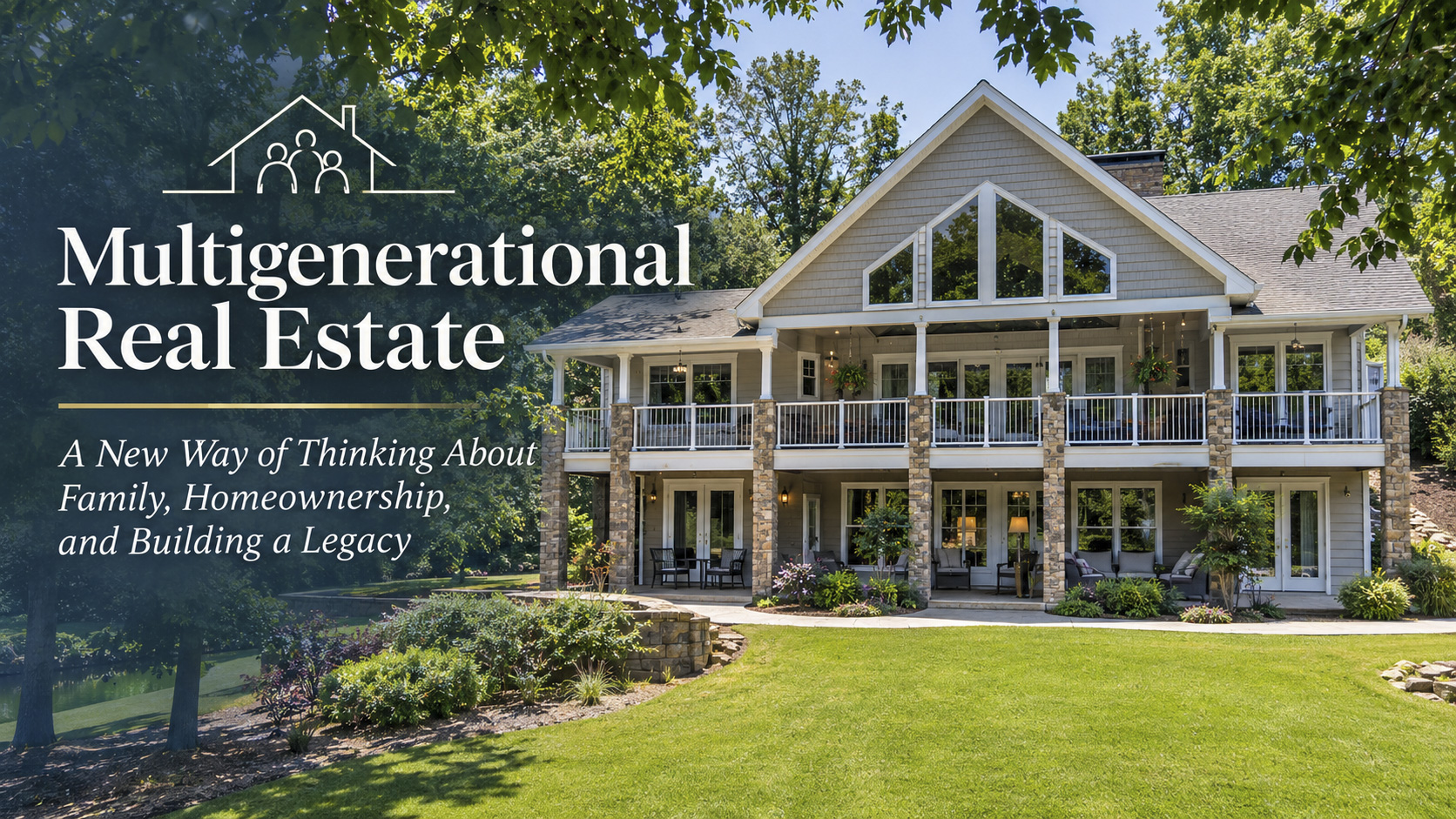
From family vacation homes designed to bring generations together to primary residences that accommodate aging parents, multigenerational homeownership is creating new opportunities for families to invest in real estate, share resources, and plan for the future.
When we look at real estate trends, we often focus on interest rates, inventory, home prices, and buyer demand. But there is another shift worth watching: the way families are thinking about homeownership across generations.
We are seeing more interest in real estate purchases that serve more than one generation of a family. Sometimes the goal is to create a vacation home where children and grandchildren can gather for years to come. In other situations, parents and adult children are finding creative ways to purchase a primary residence together, allowing aging parents to maintain their independence while helping the younger generation establish long-term equity.
These arrangements are not entirely new, but the motivations behind them are worth exploring. For some families, it is about creating a legacy. For others, it is about making their financial resources work harder, addressing the rising cost of housing, or rethinking traditional retirement living.
At Chappelear & Associates, we have had the opportunity to work with buyers and sellers involving properties that offer these types of living arrangements. It is a trend that deserves more attention, particularly as families look for ways to balance lifestyle, financial considerations, and long-term planning.
1. The Legacy Home: Creating a Place for Generations to Gather
One growing concept is the purchase of a second home specifically intended to become a gathering place for the entire family.
Parents or grandparents purchase a vacation property with the intention of creating a place where their children, grandchildren, and future generations can spend time together. Rather than purchasing a second home solely for their personal enjoyment, they are investing in a property that becomes part of the family's traditions and history.
Think of a lake house where multiple generations gather during the summer, a mountain retreat for holidays, or a vacation property where family members return year after year.
Over time, these homes can become much more than real estate. They become the backdrop for family memories, traditions, and experiences that are passed down through generations.
For families who want the property to remain in the family, estate planning can play an important role. Some owners explore establishing a trust or other ownership structure to help ensure the property is managed and transferred according to their wishes.
There are several considerations when purchasing a legacy property:
- Location: Is it convenient enough for family members to use regularly?
- Accommodations: Does the home offer enough bedrooms, bathrooms, and gathering spaces for multiple generations?
- Flexibility: Can the property accommodate changing family needs over time?
- Maintenance: Can the family comfortably manage ongoing expenses, repairs, taxes, insurance, and upkeep?
- Long-term ownership: How will the property be handled, maintained, and shared among heirs?
A legacy home can be a wonderful investment in family experiences, but it is important to think beyond the initial purchase. Establishing expectations for future ownership, expenses, scheduling, and maintenance can help prevent disagreements later.
For families considering a lake or vacation property in the Upstate of South Carolina, this concept is particularly appealing. A home on Lake Hartwell, for example, can offer a place for multiple generations to enjoy the outdoors, spend holidays together, and create traditions that last well beyond the original owner's lifetime.
2. Buying a Home Together: Rethinking Traditional Retirement Living
Another interesting approach involves adult children purchasing a primary residence with financial assistance from their parents.
For some families, this arrangement offers an alternative to traditional retirement or assisted living arrangements, particularly when parents are still relatively independent but would benefit from living near or with their adult children.
Instead of a parent purchasing a smaller home or spending their retirement savings on a residential arrangement that does not create property equity, the family considers combining financial resources to purchase a home that accommodates everyone.
The arrangement can take several forms. Adult children may purchase a home with a separate living area for their parents, while the parents contribute toward the purchase price, down payment, or ongoing housing expenses. In other situations, the family may purchase the property together under an ownership structure established with professional guidance.
There can be several advantages to exploring this option.
An opportunity to redirect financial resources.
For parents who are financially comfortable and do not currently require the services of a traditional assisted living community, contributing toward a family home may be an appealing use of their assets.
Rather than directing all of those resources toward housing expenses, the family may be able to put some of that money toward a real estate purchase that builds equity.
Of course, this is not a direct financial substitute for assisted living. Assisted living provides services, supervision, and care that a private residence does not. The suitability of this arrangement depends heavily on the parents' health, independence, and future care needs.
Helping the next generation overcome housing costs.
With mortgage rates and home prices making affordability a challenge for many buyers, parental assistance can create opportunities that might otherwise be out of reach.
Combining resources may allow adult children to purchase a larger home, make a greater down payment, reduce the amount they need to finance, or make monthly payments more manageable.
It may also allow families to purchase a home with a layout that accommodates their needs for many years rather than having to move again as circumstances change.
Building equity that can remain in the family.
When the home is owned by the adult children, or structured through an appropriate shared ownership arrangement, the property can become part of the family's long-term wealth.
Unlike rent or residential care expenses, homeownership can build equity over time. Depending on the ownership structure, mortgage balance, market conditions, and future expenses, that equity may ultimately benefit the next generation.
For parents who want to help their children financially while also having a comfortable place to live, this is a conversation worth having.
3. Finding the Right Home: Floor Plans That Make Multigenerational Living Work
From a real estate perspective, one of the most important parts of making multigenerational living successful is finding a property with the right floor plan.
Not every large home is suitable for multiple generations. Privacy, separation, accessibility, and functional living space can make the difference between a comfortable arrangement and one that becomes difficult over time.
Through our experience working with buyers and sellers, we have seen several types of properties that offer particularly good potential.
Dedicated in-law suites
Homes with a separate in-law suite are often the most obvious choice. These spaces may include a bedroom, full bathroom, living area, and sometimes a private entrance or kitchenette.
A well-designed in-law suite can provide a sense of independence while allowing family members to remain close.
Walkout and daylight basement homes
One of the most versatile options we have encountered is a home with a finished basement that creates a second living area.
Depending on the layout, a basement can offer separate bedrooms, bathrooms, living rooms, and private entrances. Some already include a second kitchen, while others have the space and potential to add one in the future, subject to applicable permits and requirements.
These homes can be particularly attractive because they offer separation between living spaces without requiring the purchase of two separate properties.
Homes with split-bedroom floor plans
A split-bedroom layout can provide additional privacy by placing the primary bedroom on one side of the home and secondary bedrooms on another.
While this may not provide complete independence, it can be an excellent solution for families who want everyone under one roof without sacrificing personal space.
Homes with flexible bonus spaces
Bonus rooms, finished garages, detached living quarters, and additional living areas can also provide opportunities for multigenerational arrangements.
The key is looking beyond how a home is currently being used and considering how its layout might accommodate changing family needs.
For buyers considering this type of arrangement, we often recommend evaluating the property not only for its current functionality but also for its potential. A home that offers the ability to create a separate living area in the future may provide considerably more flexibility than buyers initially realize.
4. Real Examples: Multigenerational Home Possibilities in the Upstate
We have had the opportunity to work with several properties throughout the Upstate that illustrate the different ways a home can accommodate multiple generations. Here are four examples of homes we have represented, each offering a different floor plan and possibilities for extended family living.
202 Plantation Point, Anderson, SC 29625
Finished daylight walkout basement offering additional living space and flexibility for extended family.
View photos and property details on Zillow
224 Andalusian Trail, Anderson, SC 29621
Dedicated in-law suite with a separate entrance, living area, bedroom, bathroom, and small kitchen.
View photos and property details on Zillow
120 Edgewater Drive, Fair Play, SC 29643
Two separate living areas, each with its own kitchen and primary suite, plus an additional basement studio apartment.
View photos and property details on Zillow
911 Austin Road, Belton, SC 29627
One-level home with three bedrooms on the main floor and a finished basement offering four additional bedrooms and a second living area.
View photos and property details on Zillow
109 Dana Lynn Lane, Pendleton, SC 29670
Five-bedroom home with a finished walkout basement featuring a separate living room, kitchenette, two additional bedrooms, and a full bathroom, offering flexibility and privacy for extended family.
View photos and property details on Zillow
These are just a few examples of the types of properties that can accommodate multigenerational living. Sometimes the ideal home already has a dedicated in-law suite, while other times a finished basement or flexible floor plan offers the opportunity to create separate living quarters over time.
5. Important Considerations Before Purchasing a Multigenerational Home
While multigenerational homeownership can offer significant lifestyle and financial benefits, it requires thoughtful planning.
Before moving forward, families should have open conversations about expectations, responsibilities, and long-term intentions.
Some important questions include:
- Who will legally own the property?
- Will parents contribute toward the down payment, mortgage, or ongoing expenses?
- Will financial contributions be considered a gift, loan, or ownership investment?
- How will property taxes, insurance, maintenance, and repairs be divided?
- What happens if one generation wants to sell or move?
- How will the property be handled if a parent passes away?
- Does the home provide adequate privacy and accessibility for everyone?
- Will the arrangement continue to work if a parent's health or care needs change?
It is also important to consult the appropriate professionals before structuring the purchase. An estate-planning attorney, tax professional, and mortgage lender can help families understand the implications of trusts, gifts, shared ownership, inheritance, financing, and potential long-term care or Medicaid eligibility issues.
The right ownership structure can make a significant difference, particularly when multiple generations are contributing financially to a property.
Planning these details before purchasing can help protect family relationships as well as the investment.
6. Is Multigenerational Homeownership Right for Your Family?
There is no single arrangement that works for every family. Some parents prefer to maintain a separate residence, while others welcome the opportunity to live closer to their children and grandchildren. Some families are interested in creating a vacation property that will remain in the family, while others are looking for a practical way to combine resources and make homeownership more attainable.
What is interesting is that real estate is increasingly becoming part of a broader family financial and lifestyle conversation.
Rather than thinking about a home as something purchased for one household at one point in time, families are beginning to consider how a property can serve multiple generations and create value over a much longer period.
For some, that may mean purchasing a lake home where the entire family gathers every summer. For others, it may mean finding a primary residence with a finished basement that gives aging parents their own living space while allowing adult children to build equity.
In either case, the right property can offer something beyond square footage and location. It can provide flexibility, financial opportunity, and a place for family members to remain connected.
A Different Perspective on Buying Real Estate
At Chappelear & Associates, we believe real estate decisions should consider more than the immediate purchase. Understanding how a home may serve a family over time can open the door to opportunities buyers might not have otherwise considered.
We have worked with buyers and sellers involving homes with separate living quarters, basement apartments, in-law suites, and flexible floor plans. These features can be especially important for families exploring multigenerational living.
As this approach to homeownership continues to evolve, we believe it will become an increasingly important consideration for buyers, particularly those planning for retirement, helping adult children establish themselves, or looking to create a lasting family legacy.
Sometimes the best real estate investment isn't simply the home that meets your needs today. It is the home that can continue serving your family for generations to come.
If you are considering a multigenerational home purchase in Anderson, Lake Hartwell, or the surrounding Upstate South Carolina area, Chappelear & Associates can help you identify properties with the layouts, features, and flexibility to accommodate your family's plans.
Visit AndersonForSale.com or contact our team to start the conversation.
Frequently Asked Questions About Multigenerational Homes
What is a multigenerational home?
A multigenerational home is a property designed or adapted to accommodate two or more generations of a family, such as parents, adult children, and grandchildren. It may include a dedicated in-law suite, a separate apartment, a finished basement, or multiple living areas.
Can parents help their adult children buy a home and live in it too?
Yes. Families can explore several arrangements, including parental gifts toward a down payment, shared ownership, or other financial contributions. The appropriate structure depends on mortgage requirements, ownership goals, and individual circumstances.
Are finished basements good for multigenerational living?
They can be excellent options, especially when they offer a separate entrance, bedrooms, bathrooms, and living space. Some also have a second kitchen or the potential to add one, subject to applicable requirements.
What is the difference between an in-law suite and a separate apartment?
An in-law suite generally provides private accommodations within a larger home. A separate apartment typically offers more independent living amenities, such as its own kitchen, bathroom, living area, and entrance.
Can a family purchase a vacation home and leave it to future generations?
Yes. Families can explore estate-planning arrangements, including trusts, to establish how a vacation property will be managed and transferred. An estate-planning attorney can help determine the best approach.
Where can I find multigenerational homes in Anderson and the Upstate of South Carolina?
Look for homes with dedicated in-law suites, walkout basements, separate living quarters, and flexible floor plans. Chappelear & Associates can help buyers identify properties throughout Anderson, Lake Hartwell, and surrounding Upstate communities that may accommodate multigenerational living.